Croatia – Be inspired
There are places in Europe where luxury has been cultivated for generations. The French Riviera has Cannes and Saint-Tropez. Italy has Capri and Lake Como. Spain has Marbella and Ibiza.
And then there is Croatia.
Stretching along the brilliant blue waters of the Adriatic, Croatia has quietly transformed itself into one of Europe’s most intriguing luxury destinations. Ancient stone cities meet secluded islands, superyachts drift between hidden coves, sophisticated resorts emerge from pine forests and private villas overlook a coastline that seems almost impossibly beautiful.
Yet Croatia still possesses something many of Europe’s established luxury destinations have gradually lost: the feeling of discovery.
Beyond the famous walls of Dubrovnik and the fashionable harbour of Hvar lies an extraordinary Mediterranean world of more than a thousand islands and islets, historic towns, vineyards, olive groves, national parks and wonderfully clear water.
For travellers searching for European luxury with character, Croatia deserves far more than a few days on a conventional summer itinerary.
It deserves a journey of its own.
A country shaped by the Adriatic
To understand Croatia, you first have to understand its relationship with the sea.
The country’s distinctive geography stretches along the eastern Adriatic opposite Italy. Much of its most celebrated landscape consists of a narrow coastline backed by mountains, with hundreds of islands scattered offshore.
This creates a coastline of remarkable complexity.
Instead of endless straight beaches, Croatia offers bays, rocky coves, tiny fishing harbours, forested islands and channels where the sea can appear almost completely still.
The water itself is one of Croatia’s greatest luxuries.
In many places it is exceptionally clear, shifting between deep sapphire blue and luminous turquoise as the depth changes. Boats seem almost suspended above the seabed.
For centuries these waters have connected communities, traders and cultures. Today they have helped turn Croatia into one of Europe’s great sailing and yachting destinations.
And travelling by sea may ultimately be the most luxurious way to experience the country.
Dubrovnik – where history meets five-star luxury
Few cities in Europe make an entrance quite like Dubrovnik.
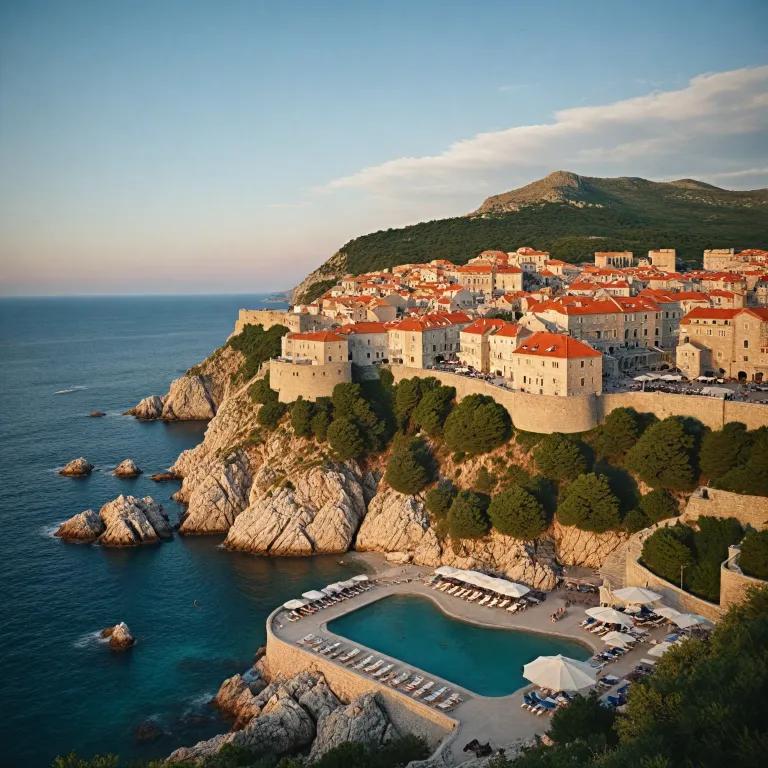
The medieval city rises directly from the Adriatic, protected by monumental stone walls surrounding a maze of limestone streets, churches, palaces and terracotta rooftops.
Walk through the gates early in the morning, before the busiest hours of the day, and the atmosphere can be extraordinary.
Stone façades glow in the Mediterranean sunlight. Narrow streets disappear between centuries-old buildings. Small restaurants prepare for lunch while the Adriatic appears unexpectedly at the end of ancient passageways.
The entire Old City of Dubrovnik is recognised as a UNESCO World Heritage Site.
But Dubrovnik is not simply a historical destination.
Around the old city, some of Croatia’s most established luxury hotels occupy spectacular positions overlooking the sea. Suites with Adriatic terraces, private beach access, infinity pools, spas and fine dining allow travellers to experience the city without sacrificing contemporary comfort.
For the ultimate arrival, come from the sea.
There is something wonderfully theatrical about approaching Dubrovnik aboard a private yacht as its enormous walls slowly emerge from the coastline.

Hvar – Croatia’s glamorous island
If Dubrovnik represents history and grandeur, Hvar represents Croatia’s more glamorous personality.
The island has become one of the Adriatic’s most fashionable destinations, attracting yachts, international travellers and sophisticated summer crowds. Hvar Town forms its social heart, where an elegant harbour is surrounded by historic buildings, restaurants, terraces and boats.
But reducing Hvar to nightlife would be a serious mistake.
Away from the harbour, the island changes quickly.
Lavender fields, olive groves, vineyards, pine forests and tiny villages reveal a quieter Mediterranean landscape. Hidden bays provide places to swim where the water can be astonishingly transparent.
The luxury hotel scene is evolving too. Properties such as Maslina Resort near Stari Grad have embraced a more understated form of high-end hospitality built around natural materials, wellness and a strong connection with the island.
This represents a broader evolution in Croatian luxury.
Rather than simply reproducing the traditional five-star hotel, the country’s most interesting properties increasingly emphasise privacy, location, local food, nature and design.
The result is luxury that feels distinctly Mediterranean.
The Pakleni Islands – escape from Hvar by boat
Directly opposite Hvar lies another world.
The Pakleni Islands are a chain of small, largely undeveloped islands covered in Mediterranean vegetation and surrounded by spectacular water.
A private boat opens the door to secluded coves that are difficult or impossible to reach by road. Spend the morning swimming from the yacht, move to another bay for lunch and find a quiet anchorage for the afternoon.
Then return to Hvar as the sun begins to drop.
It is difficult to imagine a more elegant Mediterranean day.
This ability to combine glamorous towns with near-total isolation is one of Croatia’s greatest strengths as a luxury destination.
You can be drinking champagne beside a busy harbour one evening and swimming from a yacht in an almost empty cove the following morning.
Private yachts – perhaps the ultimate Croatian luxury
Some countries are best explored by car.
Croatia is different.
Here, a private yacht can effectively become your luxury hotel.
Charter a crewed sailing yacht, catamaran or motor yacht and the itinerary suddenly becomes wonderfully flexible. One morning you might wake outside Hvar. The next could begin near Vis, Brač, Korčula or a tiny island that barely appears on conventional tourist itineraries.
Breakfast is served on deck.
The captain sets course for a secluded bay.
Lunch might be in a small waterfront restaurant accessible primarily by boat.
The afternoon disappears between swimming, snorkelling and sunbathing.
By evening you enter another historic harbour.
For families and groups of friends, a multi-day yacht charter can provide a level of freedom that even an exceptional hotel struggles to match. It is also an increasingly recognised part of Croatia’s high-end travel scene.
The rise of Croatia’s private villas
There is another way to experience Croatian luxury: rent your own piece of the coastline.
The country’s high-end villa market has developed dramatically.
Across Hvar, Brač, Vis, Istria, the Dubrovnik region and other coastal areas, travellers can find sophisticated properties with infinity pools, sea views, outdoor kitchens, landscaped gardens and direct or near-direct access to the Adriatic.
The finest properties can be combined with private chefs, housekeeping, chauffeurs, concierge services and boat charters.
For families or several couples travelling together, this can create something hotels cannot easily reproduce.
Privacy.
Breakfast happens whenever you want it to happen. Children can jump into the pool while adults linger over coffee. Lunch might be prepared by a private chef. A boat arrives in the afternoon to take everyone swimming.
And at sunset there are no strangers competing for the best table.
Recent luxury-villa selections in Croatia stretch from the islands to Istrian wine country and the Dubrovnik region, reflecting how broad this segment has become. (The Times)
Split – a Roman palace that became a city
Split offers one of Europe’s most unusual urban experiences.
At its centre stands Diocletian’s Palace, constructed for the Roman emperor around the beginning of the fourth century.
But this is not a palace in the conventional museum sense.
People live inside it.
Restaurants occupy ancient spaces. Apartments appear above Roman walls. Cafés fill squares where emperors once walked. Narrow passages open suddenly into lively courtyards.
Modern Split has effectively grown through and around the ancient palace.
The result is wonderfully atmospheric.
Stay in a sophisticated heritage hotel, wander through the old city in the evening and then dine outside as centuries-old stone turns golden beneath Mediterranean light.
Split is also one of the great gateways to the islands.
From here, Hvar, Brač, Šolta and other destinations are within easy reach, making the city an ideal starting point for an island-hopping journey.
Brač – beauty beyond Hvar
Hvar receives much of the international attention, but neighbouring Brač deserves serious consideration.
The island is famous for Zlatni Rat, the distinctive beach near Bol whose shape extends dramatically into the Adriatic.
Yet Brač offers considerably more than one famous beach.
Traditional villages, vineyards, olive groves, secluded bays and beautiful stone architecture create an atmosphere that can feel more relaxed than Hvar.
For travellers seeking luxury without quite as much social theatre, that can be exactly the attraction.
Rent a villa, hire a boat and allow the days to develop naturally.
Croatia rewards travellers who stop looking at the clock.
Vis – the island for those who want to disappear
Travel farther into the Adriatic and you eventually reach Vis.
For decades the island’s military importance limited tourism development, which helped preserve an atmosphere that distinguishes it from some of Croatia’s busier islands.
Today Vis attracts travellers looking for authenticity, beautiful water, excellent food and a slower rhythm.
The luxury here is less about grand resorts.
It is about access.
A beautiful stone villa. A boat waiting in the harbour. Fresh seafood at a small restaurant. Wine from the island. Swimming in a hidden bay before breakfast.
Vis demonstrates something important about modern luxury travel.
Sometimes the greatest luxury is simply being somewhere beautiful where very little is happening.
Rovinj – Croatia with an Italian soul
Travel north towards the Istrian peninsula and Croatia reveals another personality entirely.
Rovinj rises from the Adriatic in a cluster of colourful buildings and narrow streets dominated by the Church of St. Euphemia.
The town has a distinctly Italian atmosphere, hardly surprising considering the complex history of Istria and its proximity to Italy.
This is a destination for romantic evenings.
Walk through the old streets before dinner, stop for an aperitif beside the water and watch fishing boats return as the light changes across the Adriatic.
Around Rovinj, some of Croatia’s most ambitious luxury hotels and resorts have emerged, combining contemporary architecture, sophisticated restaurants and wellness facilities with extraordinary coastal settings.

Istria – Croatia’s answer to Tuscany
Leave Rovinj and drive inland.
Within a surprisingly short distance, the sea disappears.
Vineyards replace beaches. Olive groves cover the hills. Medieval villages occupy hilltops above the countryside.
This is Istria.
For food and wine travellers, it may be one of Croatia’s greatest discoveries.
The region is particularly celebrated for olive oil, wine and truffles. Small producers, wineries and restaurants are scattered through the landscape, creating the possibility of an entirely different Croatian luxury holiday.
Stay in a beautifully restored stone property or wine hotel. Visit vineyards during the afternoon. Taste local olive oil. Go truffle hunting. Spend several hours over dinner.
Then continue to the coast the following morning.
Combining coastal Croatia with inland Istria creates a journey remarkably reminiscent of Italy, but with a personality of its own.
Korčula – wine, stone and Mediterranean elegance
Farther south lies Korčula.
The island’s historic main town occupies a small peninsula surrounded by the sea. Stone streets and defensive walls give it an almost miniature-Dubrovnik atmosphere, but the pace is considerably calmer.
The surrounding island contains vineyards, beaches and small communities.
Wine is particularly important here.
Indigenous Croatian grape varieties provide travellers with an opportunity to discover wines rarely encountered elsewhere in the world.
A day on Korčula might involve breakfast beside the sea, a private winery visit in the afternoon and dinner overlooking the old town.
It is sophisticated without feeling manufactured.
Croatia for food lovers
Croatian gastronomy changes significantly as you travel through the country.
Along the Dalmatian coast, seafood naturally plays a starring role.
Fresh fish grilled simply with olive oil, garlic and herbs can be extraordinary when eaten beside the water. Octopus, shellfish and black risotto appear regularly on coastal menus.
Move into Istria and the culinary landscape changes.
Truffles, handmade pasta, olive oil and wine reveal the region’s close historical relationship with Italy.
Croatia also has a growing fine-dining culture.
But some of the country’s greatest meals remain remarkably simple.
A table beside the sea. Fish caught that morning. Local olive oil. Croatian wine. Sunset.
Luxury does not always require complexity.
Wine – one of Croatia’s best-kept secrets
International visitors are often surprised by Croatian wine.
Wine has been produced here for thousands of years, yet much of it remains unfamiliar outside the region.
That makes exploring it particularly enjoyable.
Rather than ordering another internationally familiar Chardonnay or Cabernet Sauvignon, travellers can discover indigenous grapes and small producers whose wines rarely travel far beyond Croatia.
Wine regions extend from Istria in the north to Dalmatia and the islands farther south.
Private tastings and vineyard visits can therefore become part of a wider luxury itinerary rather than a separate wine holiday.
Wellness beside the Adriatic
Croatia’s luxury resorts increasingly understand that modern travellers want more than beautiful bedrooms.
Wellness has become an important part of the country’s high-end hospitality scene.
Imagine waking beside the Adriatic, swimming before breakfast and then disappearing into a spa for several hours.
Yoga, massages, saunas, pools and treatments inspired by Mediterranean ingredients can easily be combined with hiking, cycling, swimming and sailing.
Hvar in particular has seen renewed attention as a wellness destination, with luxury properties drawing on the island’s natural surroundings and traditions.
It creates a particularly appealing balance.
Croatia can be glamorous when you want glamour – and remarkably restorative when you do not.
Plitvice Lakes – leave the coast behind
It would be easy to spend an entire Croatian holiday beside the Adriatic.
But the country’s interior deserves attention too.
Plitvice Lakes National Park presents a completely different landscape of forests, turquoise lakes and waterfalls.
Wooden paths lead visitors through an almost fantastical environment where water moves continuously between different levels of the landscape.
For international visitors taking a longer Croatian journey, adding the national park provides an important contrast to the islands and coastline.
The country suddenly feels far larger and more diverse.
When is the best time to visit Croatia?
For classic Mediterranean luxury, June through September remains the obvious period.
July and August provide hot weather, warm sea temperatures and the greatest energy in coastal resorts and islands. They are also the busiest months.
For sophisticated travellers with flexibility, June and September can be particularly attractive.
Restaurants, hotels and yacht services are operating, the weather can still be excellent and the atmosphere is often less intense.
May and early October can also be wonderful for culture, food, wine and sightseeing, although weather becomes less predictable and some seasonal island businesses may operate reduced schedules.
The best period therefore depends on the desired experience.
If the dream is yachts, beach clubs and long summer nights, choose high summer.
If it is wine, gastronomy, romantic hotels and quieter historic towns, consider the shoulder seasons.
How to reach Croatia
Croatia is surprisingly accessible.
Zagreb is the country’s capital and principal inland hub, while Dubrovnik and Split provide particularly useful gateways for travellers focusing on the Dalmatian coast.
Pula serves Istria, while several other airports provide seasonal international connections.
For luxury travellers, however, the airport is merely the beginning.
A private transfer can deliver you directly to a coastal resort. A speedboat can continue the journey to an island. Helicopter and private aviation arrangements can be considered for more specialised itineraries.
The key is to treat transportation as part of the holiday rather than an inconvenience between hotels.
In Croatia, arriving by boat is often part of the magic.
A perfect two-week luxury journey through Croatia
For travellers visiting from North America, Asia, the Middle East or other distant markets, Croatia deserves enough time.
An exceptional journey could begin in Istria, combining Rovinj with wineries, olive estates and countryside hotels.
Fly or travel south to Split and spend several nights surrounded by Roman history.
Then board a private yacht.
Sail towards Hvar, explore the Pakleni Islands, continue towards Vis and Korčula and allow the captain to find secluded swimming spots along the way.
Eventually arrive in Dubrovnik from the sea.
Finish the journey with several nights in a five-star hotel overlooking the Adriatic.
It would be difficult to design a Mediterranean itinerary offering more variety.
What international travellers should know
Croatia is a member of both the European Union and the Schengen Area and uses the euro, making travel relatively straightforward for visitors already travelling within much of Europe.
English is widely used throughout the tourism industry, particularly in hotels, restaurants, marinas and popular coastal destinations.
Visitors should still check current passport and visa requirements applicable to their nationality before travelling.
Driving can be an excellent way to explore Istria and parts of the mainland, while ferries and private boats become increasingly important once the journey reaches the islands.
Travellers planning multiple islands should avoid creating an overly ambitious schedule.
Croatia looks relatively compact on a map.
But the entire point is to slow down.
The new Mediterranean luxury
Perhaps the greatest reason to visit Croatia is that the country has reached an intriguing moment in its development.
The natural beauty was always here.
So were the ancient towns, islands, vineyards and clear Adriatic waters.
What has changed is the infrastructure surrounding them.
Sophisticated boutique hotels, ambitious resorts, extraordinary villas, private yachts, spas and increasingly refined restaurants now allow international travellers to experience Croatia at a genuinely high level. The luxury-hotel market ranges from historic five-star properties to newer boutique retreats designed around their landscapes.
Yet the country has not completely surrendered its authenticity.
Fishing boats still enter tiny harbours.
Families still produce wine and olive oil.
Stone villages remain hidden behind the coast.
There are still bays where the only sensible way to arrive is by boat.
And there are still islands where an afternoon can disappear without anyone feeling the need to do anything at all.
That balance is precious.
At Luxuryvacation.travel, Croatia represents exactly the kind of destination modern luxury travellers should be watching: beautiful enough to compete with Europe’s most famous Mediterranean destinations, sophisticated enough for demanding international guests and still adventurous enough to feel like a discovery.
Come for Dubrovnik and Hvar if you wish.
But stay for Vis, Korčula, Rovinj, Istria, the vineyards, the hidden bays and the evenings when your yacht drops anchor somewhere you had never heard of before.
Because Croatia’s greatest luxury may not be any particular five-star hotel.
It is the feeling that somewhere among those countless islands, there is still a corner of the Mediterranean waiting just for you.