Italy’s Best-Kept Secrets: Four Extraordinary Destinations Beyond the Tourist Trail
For travellers who have already seen Rome, Florence and the Amalfi Coast, Italy still has another side to reveal.
There is a particular moment that comes with travelling extensively through Italy. Eventually, the Colosseum has been photographed, the gondolas of Venice have been admired, the galleries of Florence explored and the spectacular coastline of Amalfi experienced.
And then a different question begins to emerge:
Where do you go when you want to discover Italy rather than simply visit it?
The answer lies away from the great tourist capitals and famous coastal resorts.
Italy is filled with medieval villages hidden among mountains, ancient settlements slowly reclaimed by nature, remote landscapes and small communities where centuries-old traditions remain part of everyday life. These places rarely appear on conventional package-holiday itineraries. They are destinations for travellers prepared to take the scenic road, stay a little longer and exchange the familiar highlights for something considerably more personal.
For the discerning traveller, this can be one of the greatest luxuries of all.
Not necessarily a private jet or a suite overlooking the sea, but the feeling that you have discovered somewhere that most visitors have never seen.
Here are four remarkable destinations for an entirely different Italian escape.
Agnone, Molise
Where a thousand-year-old tradition is still alive
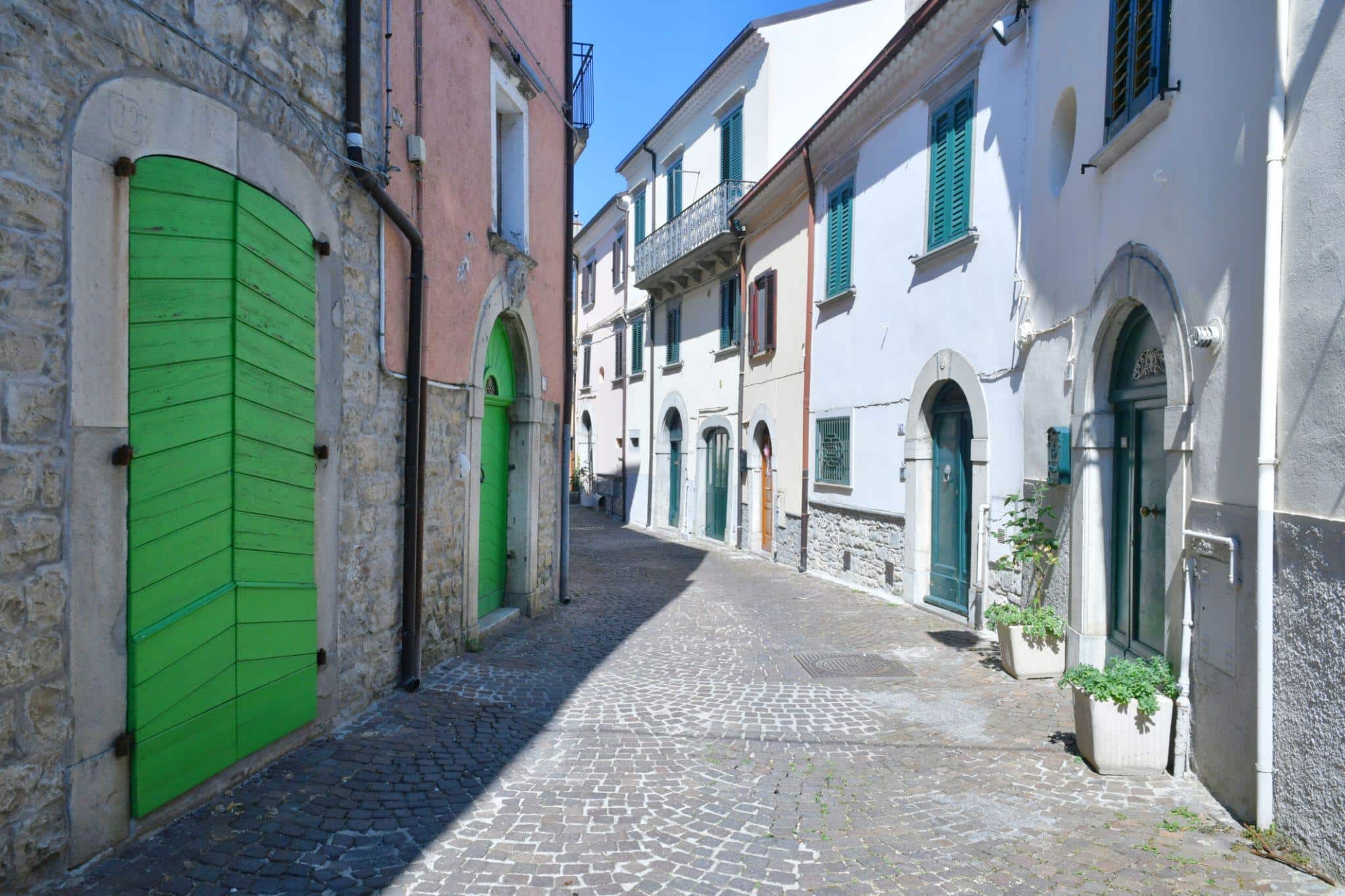
High in the mountains of Molise, at around 840 metres above sea level, lies Agnone, a remarkably atmospheric medieval town surrounded by the landscapes of southern Italy’s Apennines.
Molise is one of Italy’s lesser-known regions, and Agnone perfectly illustrates why the area deserves much more attention. Its historic centre is a maze of stone streets, churches, workshops and small squares, while the surrounding countryside is characterised by forests, mountains and traditional agricultural landscapes.
But Agnone possesses something that makes it truly exceptional.
For centuries, its identity has been connected with the making of bells.
The Pontifical Marinelli Bell Foundry represents one of the world’s most extraordinary surviving artisan traditions. The Marinelli family has continued the craft across generations, and the local tourism authorities trace the bell-making tradition back to at least the medieval period. The foundry’s museum and workshop offer visitors an insight into the techniques, history and craftsmanship behind bells that have been produced in Agnone for generations.
This is precisely the kind of experience that makes an unconventional Italian journey memorable.
Instead of merely looking at another historic monument, you are seeing a living tradition. You can hear the bells, see the furnaces and understand how an object that has played an important role in European religious and cultural life is still made by hand.
The town itself deserves time.
A walk through Agnone’s historic centre reveals numerous churches, historic buildings and traditional metalworking workshops. The town’s archaeological heritage and the Bell Museum add further depth, while local food provides another reason to stay. Regional specialities include caciocavallo and scamorza cheeses, local charcuterie, handmade pasta and dishes featuring porcini mushrooms and lamb.
For an especially atmospheric visit, consider travelling in December. Agnone hosts the ‘Ndocciata, a spectacular traditional procession in which enormous flaming torches are carried through the town. It is an extraordinary example of how local traditions remain woven into contemporary life.
What to experience
The Marinelli foundry should be the centrepiece of any visit, ideally combined with a private walking tour of the historic centre. Afterwards, allow yourself time for a long lunch featuring Molise’s traditional cuisine rather than searching for international dining.
Nature lovers can explore the surrounding countryside and the Cascate del Verrino waterfalls, while those interested in culture can spend time discovering Agnone’s churches, historic buildings and artisan traditions. The local tourism organisation also provides guided tours of the historic centre.
Where to stay
Agnone is best approached as part of a slower journey through Molise rather than as a conventional resort destination. Look for an intimate boutique hotel, historic guesthouse or carefully restored country property rather than a large international hotel.
The attraction here is authenticity.
How to get there
Agnone is best reached by car, allowing you to explore the surrounding mountain villages and countryside at your own pace. A private driver can also transform the experience into a more relaxed luxury journey, particularly when combining Agnone with other destinations in Molise and Abruzzo.
Best time to visit
Late spring, early summer and early autumn are particularly attractive for exploring the surrounding countryside. December is the obvious choice if you want to experience the dramatic ‘Ndocciata celebration.
Why go?
Because Agnone offers something increasingly rare in modern tourism: a genuine living tradition rather than a reconstructed attraction.
Santo Stefano di Sessanio, Abruzzo
A medieval mountain retreat where time seems to have stopped
There are places in Italy where the landscape is beautiful.
And then there are places where the landscape changes the entire mood of the journey.
Santo Stefano di Sessanio is one of them.
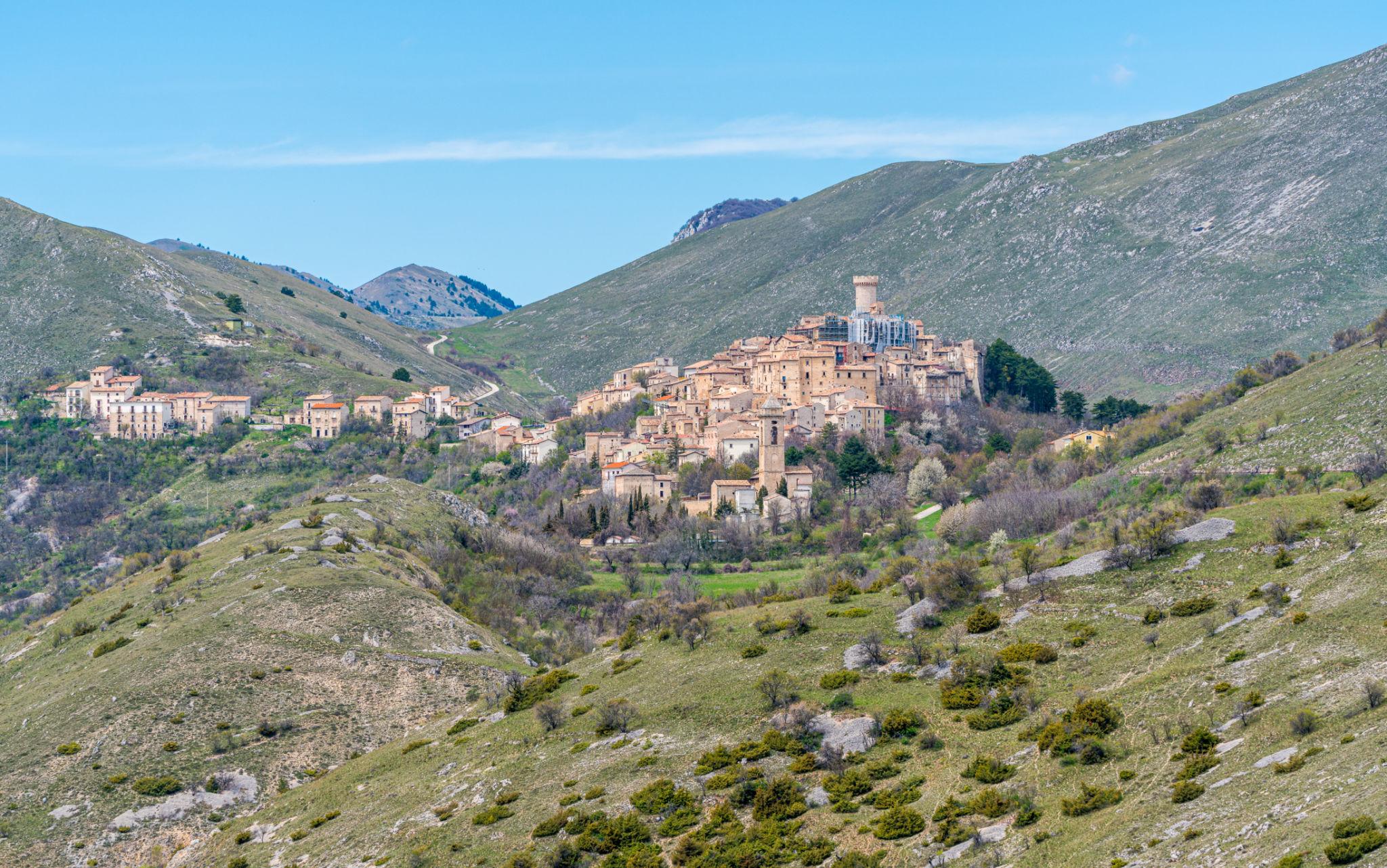
Situated at approximately 1,200 metres above sea level at the gateway to the Gran Sasso and Monti della Laga National Park, this extraordinarily well-preserved medieval village appears to emerge directly from the surrounding mountains. Its narrow paved streets and historic limestone buildings create an atmosphere that feels remarkably removed from contemporary Italy.
The village developed around a fortified tower from the medieval period and retains much of its historic character. Today, its position beneath the Gran Sasso mountains makes it particularly appealing to travellers looking for an Italian escape based on nature, architecture and tranquillity rather than nightlife or conventional sightseeing.
This is perhaps the destination on our list that comes closest to the idea of quiet luxury.
There is no need for a long list of attractions.
Instead, you wake up in an old stone building, walk through narrow lanes, have breakfast slowly, take a mountain excursion and return in the afternoon for an extended lunch.
The surrounding landscape is spectacular.
The enormous Campo Imperatore plateau is accessible from the area, while the Gran Sasso provides opportunities for hiking, cycling and mountain excursions. Rocca Calascio, one of Italy’s most dramatic medieval fortresses, is another natural addition to the itinerary. The local tourism authorities specifically recommend excursions to Rocca Calascio, Campo Imperatore and the surrounding mountain landscape.
Food is another important part of the experience.
Santo Stefano di Sessanio is particularly associated with its lentils, while traditional Abruzzese cuisine includes hearty mountain dishes, local cheeses and lamb. The village’s traditional food culture fits perfectly with the surrounding landscape: uncomplicated ingredients, strong flavours and recipes developed for generations of mountain living.
What to experience

Begin with a slow morning exploring the village itself. The Torre Medicea, historic gateways and stone lanes provide an intimate introduction to the area.
Then venture into the mountains.
A private guide can take you towards Rocca Calascio or deeper into the Gran Sasso landscape, depending on the season and your interests. During summer, hiking and cycling are particularly rewarding; in the colder months, the mountains take on an entirely different atmosphere.
A visit to Campo Imperatore should be considered essential for anyone with an interest in dramatic landscapes.
Where to stay
This is a destination where the accommodation itself should be part of the experience.
Rather than choosing a large resort, look for a beautifully restored historic property or an albergo diffuso, where rooms are integrated into traditional village buildings.
The concept is particularly appropriate here because it allows visitors to experience the village as part of their accommodation rather than simply viewing it from a hotel window.
How to get there
A car is strongly recommended. Santo Stefano di Sessanio is most rewarding when incorporated into a private road trip through Abruzzo, allowing you to combine the village with Rocca Calascio, Campo Imperatore and other mountain communities.
Best time to visit
Late spring through early autumn is ideal for outdoor activities. Autumn is particularly beautiful, with changing colours across the mountains. Winter offers the most atmospheric experience for travellers who enjoy snow, fireplaces and complete tranquillity.
Why go?
Because Santo Stefano di Sessanio offers an increasingly rare form of luxury: silence.
Craco, Basilicata
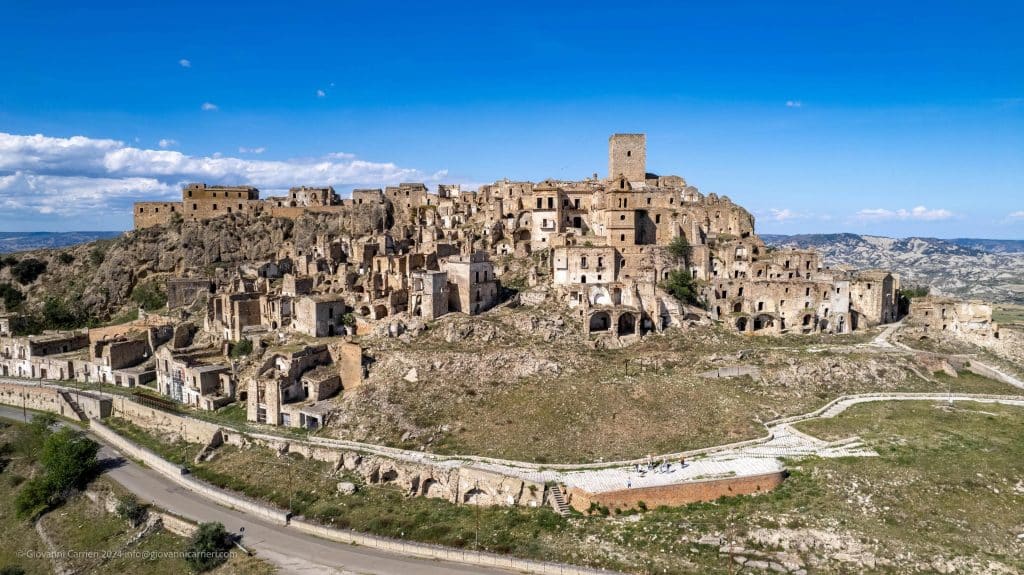
Italy’s haunting ghost town
Few places in Italy create such an immediate sense of mystery as Craco.
From a distance, the abandoned medieval settlement appears to rise impossibly from the barren landscape of Basilicata. Stone buildings cling to the ridge while the surrounding valleys stretch away towards the horizon.
Craco was abandoned in 1963 following a landslide, after earlier geological problems had already threatened the settlement. Today, Craco Vecchia remains a spectacular collection of ruins, including churches, palaces and medieval structures.
Walking through the ruins is an experience unlike almost anything else in Italy.
There are no elegant piazzas filled with cafés, no fashionable boutiques and no crowds moving between famous landmarks. Instead, there is silence.
The remains of the old settlement tell the story of a community that once lived here. Ancient churches and noble residences remain scattered across the hill, while nature slowly continues to reclaim the buildings.
The atmosphere is so extraordinary that Craco has been used as a filming location for major productions, including Mel Gibson’s The Passion of the Christ and Francesco Rosi’s Christ Stopped at Eboli.
This is not a destination for those looking for traditional luxury.
It is a destination for those who define luxury as access to the extraordinary.
Craco works particularly well as part of a private journey through Basilicata. Combine it with several nights in Matera, explore the surrounding countryside with a driver and guide, and allow time for long lunches and visits to smaller villages.
Matera and Craco also provide an extraordinary contrast.
Matera has transformed its ancient cave dwellings into boutique hotels, restaurants and cultural spaces. Craco, by contrast, has remained frozen in its abandoned state.
Together they reveal two radically different ways in which Italy’s historic settlements can survive into the modern age.
What to experience

A guided visit is the best way to understand Craco. Because of the condition of the ruins and the terrain, access is controlled and visitors are required to follow safety measures, including protective helmets.
Photography is particularly rewarding here. Early morning and late afternoon create dramatic shadows across the abandoned buildings and surrounding landscape.
Where to stay
The most luxurious option is to use Craco as part of a wider Basilicata itinerary and stay in a high-quality boutique property in Matera or the surrounding countryside.
This gives you the best of both worlds: sophisticated accommodation combined with an experience that feels genuinely adventurous.
How to get there
A private car or driver is the most convenient option. Craco is remote and is best visited as part of a wider road journey through Basilicata.
Best time to visit
Spring and autumn offer comfortable temperatures for exploring the area. Summer can be extremely hot, so early starts are preferable.
Why go?
Because there are very few places where you can walk through a medieval Italian town and hear almost nothing except your own footsteps.
Civita di Bagnoregio, Lazio
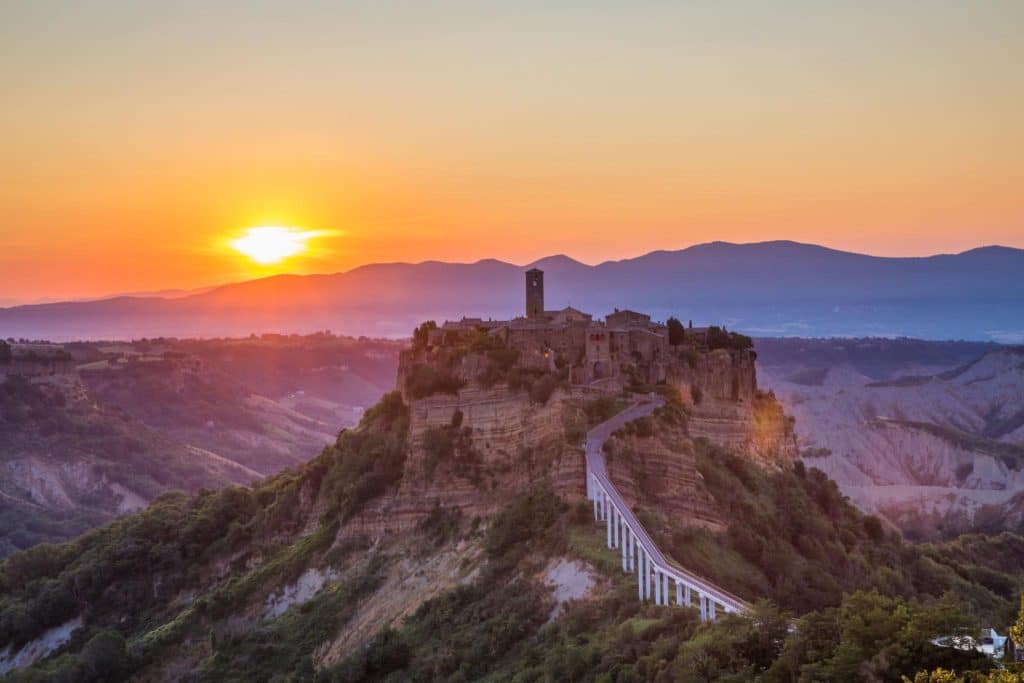
The medieval town suspended above the landscape
Some Italian villages are beautiful.
Civita di Bagnoregio is almost otherworldly.
Perched on a fragile tuff hill surrounded by the spectacular Valle dei Calanchi, Civita appears to float above the landscape. Access is exclusively on foot via a long pedestrian bridge, creating a dramatic arrival that is very different from entering an ordinary Italian town.
The origins of the settlement reach back more than 2,500 years to the Etruscans, while the medieval town visible today developed through successive Roman, Gothic and Longobard influences.
The nickname “the Dying City” refers to the erosion of the soft volcanic landscape beneath it.
But the name is misleading in one important respect.
Civita is very much alive as a cultural destination.
Its extraordinary location has attracted visitors, artists and filmmakers from around the world, while the village has also been recognised internationally for its approach to sustainable tourism. In 2023, Civita di Bagnoregio received the UNWTO’s Best Tourism Village designation.
The experience begins before you even enter the village.
From the viewpoint in Bagnoregio, Civita can be seen rising dramatically from the Valle dei Calanchi. At sunset, the combination of golden stone, deep valleys and changing light creates one of the most beautiful scenes in Lazio.

Cross the bridge and the atmosphere changes completely.
Inside the village, medieval lanes lead towards small squares and ancient buildings. The Church of San Donato dominates the central piazza, while the Geological and Landslide Museum provides an insight into the geological forces that have shaped the area.
What to experience
The most rewarding way to visit Civita is to arrive early or late in the day.
Walk across the bridge slowly rather than treating the crossing simply as a means of getting to the village. Stop at the viewpoints and photograph the landscape from different angles.
Once inside, take your time.
Explore the medieval lanes, visit San Donato and enjoy a long lunch rather than trying to combine the village with too many other attractions.
For a more sophisticated experience, arrange a private guide and combine Civita with the vineyards, historic villages and countryside of northern Lazio.
Where to stay
Civita works beautifully as part of a luxury countryside itinerary.
Rather than staying immediately beside the village, consider a restored country estate or boutique hotel in Lazio or neighbouring Umbria. This allows you to combine Civita with excellent food, wine and countryside experiences.
How to get there
Civita di Bagnoregio is approximately 120 kilometres from Rome and is therefore relatively easy to incorporate into a private itinerary from the capital.
A private driver is ideal because it allows you to combine the village with other destinations in Lazio without having to worry about parking or navigating rural roads.
Best time to visit
Spring and autumn are particularly attractive, offering comfortable temperatures and beautiful countryside. Early morning and sunset are the most atmospheric times of day.
Why go?
Because very few destinations create such a powerful sense of arrival. The bridge, the cliffs, the medieval architecture and the surrounding landscape combine into an experience that feels almost unreal.
The Italy Worth Discovering Slowly
The most memorable luxury journeys are rarely the ones where you see the greatest number of attractions.
They are the ones where you experience somewhere deeply.
Italy offers almost unlimited opportunities for this kind of travel. Beyond the great cities and famous coastlines lies a country of medieval villages, mountain landscapes, ancient traditions and extraordinary local cuisine.
Agnone allows you to encounter a craft that has survived for centuries.
Santo Stefano di Sessanio offers mountain silence and medieval architecture.
Craco provides a glimpse into a forgotten Italy that has been left almost untouched.
And Civita di Bagnoregio delivers one of the most extraordinary landscapes in the country.
None of them are conventional charter destinations.
That is precisely the point.
For the experienced traveller, Italy’s greatest luxury may no longer be finding the most famous hotel or the most photographed beach. It may be finding a village where the streets are quiet, meeting an artisan whose family has practised the same craft for generations, sitting down to a lunch that lasts for two hours, or watching the sun disappear behind mountains that very few international travellers ever visit.
The Italy beyond the tourist trail is still there.
You simply have to take the road less travelled to find it.